

Derma Filler Esthelis
Patients may seek dermal filler treatments for a variety of personal reasons, including enhancing facial contours, restoring lost volume, or improving the appearance of fine lines and wrinkles. Dermal fillers are injectable treatments used in medical aesthetics to address age-related changes in facial volume and structure. Common treatment areas may include the lips, cheeks, jawline, and areas with visible lines or folds. Before undergoing treatment, a consultation with a qualified healthcare professional is required to assess individual goals, review medical history, and determine whether dermal filler treatment is appropriate. Risks, benefits, limitations, and expected outcomes should be discussed prior to treatment.
Making Wrinkles Disappear
The treatment of facial wrinkles, as well as enhancement of facial volume such as the lips, cheeks, or chin, does not necessarily require surgical intervention. Injectable treatments may be used in medical aesthetics to help improve the appearance of volume loss and certain facial lines. Various injectable products are available, and the most appropriate option depends on the individual’s anatomy, treatment goals, and medical assessment. Product selection should always be determined by a qualified healthcare professional during consultation to ensure safety and suitability. As with all medical aesthetic treatments, a consultation is required to review risks, benefits, limitations, and expected outcomes, as results vary between individuals.
.
Product Qualities Important
When considering injectable dermal filler treatments, product selection and treatment planning should always prioritize safety, clinical appropriateness, and individual patient needs.
Safety
Injectable products used in medical aesthetics should be Health Canada–approved and administered by a qualified healthcare professional. A proper medical assessment is required to determine suitability and to help minimize the risk of adverse effects, including allergic reactions or complications.
Effectiveness
Dermal fillers may provide immediate improvement in the appearance of facial volume loss or wrinkles following treatment. The duration of results varies depending on the product used, the treatment area, and individual factors. Maintenance treatments may be required over time.
Comfort
Treatment comfort can vary depending on the product used, the treatment area, and individual sensitivity. Healthcare providers may use techniques to help improve comfort during the procedure, and post-treatment instructions are provided to support recovery.
As with all injectable procedures, a consultation with a qualified healthcare professional is necessary to determine appropriate treatment options and to review potential risks, benefits, and expected outcomes. Individual results may vary.
Esthelis Filler
Esthelis® Soft and Esthelis® Basic are dermal fillers within a hyaluronic acid–based range of injectable cosmetic treatments used in medical aesthetics. Esthelis® was approved by the U.S. Food and Drug Administration (FDA) in 2011 for the correction of fine lines and wrinkles, and for use in improving skin hydration. These products are designed to integrate into the dermal layer of the skin, allowing for gradual transitions between treated and untreated areas. Depending on clinical assessment and treatment goals, smaller quantities may be used in more superficial layers of the skin. Esthelis® also contains glycerol, which may support skin hydration and elasticity. It may also help stabilize hyaluronic acid within the formulation. As with all injectable treatments, a consultation with a qualified healthcare professional is required to determine suitability, review risks and benefits, and discuss expected outcomes. Individual results may vary.
What Makes Esthelis Filler Different
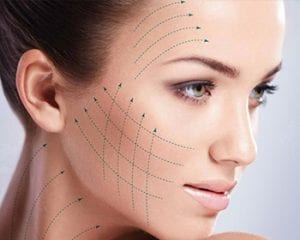
Esthelis® is a dermal filler made from non-animal sourced hyaluronic acid. It utilizes a monophasic (single-phase) formulation designed for use in medical aesthetic treatments. It incorporates a patented Cohesive Polydensified Matrix (CPM) technology, which is intended to modify the physical structure of the hyaluronic acid gel to support consistency and tissue integration when used by a qualified healthcare professional. The formulation is cross-linked using Butanediol Diglycidyl Ether (BDDE), a commonly used stabilizing agent in hyaluronic acid–based dermal fillers. As with all injectable treatments, a consultation with a qualified healthcare professional is required to determine suitability and to review potential risks, benefits, limitations, and expected outcomes. Individual results may vary.
Features of Esthelis
Esthelis® is available in different formulations, including Esthelis® Soft and Esthelis® Basic, which are used in medical aesthetic treatments based on individual patient needs and clinical assessment. Esthelis® is designed to integrate into the dermal layer of the skin and may provide a gradual transition between treated and untreated areas. Treatment outcomes depend on appropriate product selection, injection technique, and individual patient factors, and should be determined by a qualified healthcare professional.
Esthelis® Soft
Esthelis® Soft is typically used in more superficial to mid-dermal layers and may be considered for the treatment of fine lines and superficial facial wrinkles, depending on clinical assessment. Common treatment areas may include:
- Fine facial lines
- Perioral (around the mouth) lines
- Oral commissures (corners of the mouth)
- Periorbital lines (crow’s feet)
- Forehead lines
- Certain superficial facial scars or depressions
Esthelis® Basic
Esthelis® Basic is generally used in the mid to deeper dermal layers and may be considered for areas requiring greater volume support or structural correction. Common treatment areas may include:
- Lip enhancement
- Facial contouring
- Glabellar lines (between the eyebrows)
- Nasolabial folds
- Facial depressions or scars
A consultation with a qualified healthcare professional is required to determine suitability, appropriate product selection, and to review risks, benefits, limitations, and expected outcomes. Individual results may vary.
The Injection Procedure
Successful dermal filler treatment depends on accurate product placement and appropriate injection technique. In some clinical settings, advanced injection systems may be used to support controlled and consistent delivery of the product.
Fine-gauge needles or specialized delivery systems may allow the clinician to adjust injection depth, angle, and flow rate, which can assist in achieving more precise placement of the filler. These techniques may also help improve patient comfort during the procedure.
As with all injectable treatments, outcomes and side effects vary between individuals. A consultation with a qualified healthcare professional is required to determine suitability, discuss risks and benefits, and establish an appropriate treatment plan.
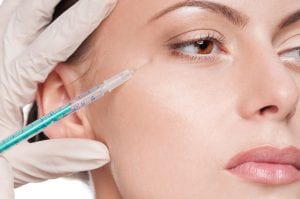
Prior to treatment, your healthcare professional will review your medical history, current medications, and treatment goals to determine whether dermal filler treatment is appropriate for you. Patients with a history of severe allergic reactions, those taking anticoagulant or immunosuppressive medications, or individuals who are pregnant or breastfeeding should inform their healthcare provider, as alternative treatment options may be recommended.
During the procedure, the treatment area is typically cleansed and injection sites may be marked. The procedure is generally completed within approximately one hour, and downtime is usually minimal, although this varies between individuals. Esthelis® is a hyaluronic acid–based dermal filler. While hyaluronic acid is naturally found in the body, all injectable treatments carry potential risks, and suitability should be determined by a qualified healthcare professional. A consultation is required prior to treatment.
Side Effects
Following dermal filler injections, it is common to experience temporary side effects such as redness, swelling, itching, mild discomfort, or bruising at the injection sites. These effects typically resolve within a few days, but in some cases, such as lip treatments, they may last up to a week. After treatment, patients are generally advised to avoid excessive sun or ultraviolet (UV) exposure and to refrain from massaging or applying pressure to the treated areas unless otherwise instructed by their healthcare provider. As with all injectable procedures, recovery experiences vary between individuals. A consultation with a qualified healthcare professional is recommended for personalized post-treatment instructions and follow-up care.