
Breast Reduction Comfort & Proportion
A fact that may surprise some is that not everyone desires larger breasts. For many women, breast reduction surgery is considered to help achieve improved body proportion and address physical discomfort associated with excessively large breasts.
At our Toronto cosmetic surgery clinic, breast reduction surgery (reduction mammoplasty) is offered to patients seeking a smaller, more proportionate breast size. This procedure may help relieve symptoms such as neck, shoulder, and back discomfort, skin irritation, and limitations during physical activity that can be associated with larger breasts.
At La Fontaine Source de Jeunesse Cosmetic Surgery Centre, breast reduction surgery is performed for patients looking to improve comfort and body proportion. A consultation with one of our surgeons can help determine whether this procedure is appropriate for your individual goals and needs.
Why Consider Breast Reduction Surgery
Breast reduction surgery is a commonly performed procedure for individuals seeking relief from physical discomfort or improved body balance. While some patients pursue breast augmentation, others may feel that reducing breast size better aligns with their personal goals and lifestyle.
Our surgeons use established surgical techniques with a focus on patient safety, individualized treatment planning, and appropriate recovery care. During your consultation, the risks, benefits, expected recovery, and potential outcomes of surgery will be reviewed to help you make an informed decision.
Contact Us
Am I a Good Candidate for Breast Reduction?
Ask Your Surgeon: Breast Reduction Consultation

What Happens in Your Breast Reduction Procedure
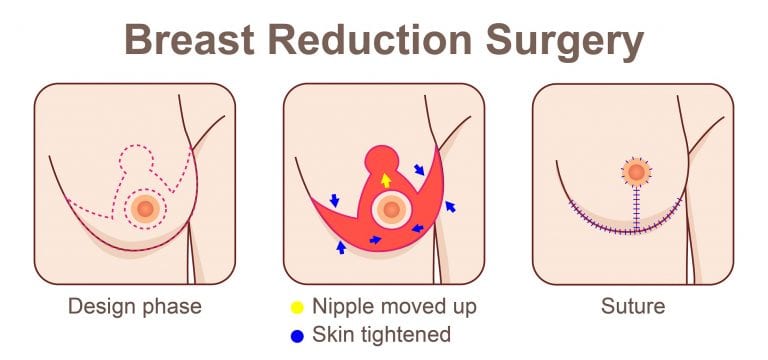
Breast reduction surgery is a procedure designed to remove excess breast tissue, fat, and skin to reduce breast size and improve breast proportion relative to the body. Depending on the patient’s anatomy and goals, the procedure may also involve reshaping the breasts and repositioning the nipples and areolas.
At La Fontaine Source de Jeunesse Cosmetic Surgery Centre, our surgeons perform breast reduction procedures using established surgical techniques tailored to the individual needs of each patient. Surgical planning is based on factors such as breast size, skin quality, degree of breast ptosis (sagging), and desired outcome.
One commonly used breast reduction technique involves incisions around the areola, vertically from the areola to the breast crease, and along the natural breast fold. Alternative surgical approaches may be appropriate for some patients depending on their anatomy and surgical goals. Your surgeon will discuss the recommended technique, expected scarring, recovery process, and potential risks and benefits during your consultation.
During the procedure, excess breast tissue, fat, and skin are removed, and the remaining breast tissue may be reshaped to improve contour and support. In some cases, liposuction may also be used to address excess tissue around the sides of the breasts or underarm area.
The nipples and areolas may be repositioned as part of the procedure while preserving blood supply whenever possible. Individual surgical plans and outcomes will vary from patient to patient.
Recovery following breast reduction surgery varies from patient to patient. Most patients can gradually resume light daily activities within several days after surgery, although temporary swelling, bruising, tightness, and discomfort are common during the healing process.
Your surgeon may recommend wearing a surgical or support bra for several weeks to help support healing and reduce swelling. Pain management, incision care, activity restrictions, and follow-up appointments will be reviewed with you as part of your post-operative instructions.
Some patients may return to work within 1 to 2 weeks depending on the nature of their job and their recovery progress. Activities involving heavy lifting, strenuous exercise, or significant upper-body movement are generally restricted for several weeks following surgery. Your surgeon will advise you when it is appropriate to gradually resume these activities.
Temporary surgical drains may be used in some cases and are typically removed within a few days after surgery. Patients should arrange for assistance at home during the early recovery period if needed.
As with any surgical procedure, breast reduction surgery carries potential risks and complications. These may include bleeding, infection, delayed wound healing, scarring, changes in nipple or breast sensation, asymmetry, complications related to anesthesia, and the potential inability to breastfeed in the future. Individual risks and expected outcomes will be discussed during your consultation.
At La Fontaine Source de Jeunesse Cosmetic Surgery Centre, patients receive detailed post-operative instructions and scheduled follow-up care to support recovery after surgery. Individual experiences and recovery timelines will vary.
.
Breast Reduction Cost & Payment Options
Bonus: Make it a Mommy Makeover!
Patients considering breast reduction surgery after pregnancy or weight changes may also discuss the option of combining procedures during their consultation, depending on their individual goals and medical suitability. In some cases, procedures such as abdominoplasty (tummy tuck) or liposuction may be considered as part of a comprehensive surgical plan to address multiple areas of concern. Eligibility for combined procedures will be determined following a full medical assessment. Breast reduction surgery is intended to reduce breast size and may help improve physical discomfort associated with enlarged breasts, such as back, neck, or shoulder strain. It may also improve breast proportion relative to the body. Every surgical procedure carries potential benefits, risks, and limitations. A consultation with one of our surgeons is required to determine whether breast reduction surgery is appropriate for your individual circumstances. Individual results vary.