

Choosing an implant for breast augmentation involves more than picking a size. Your anatomy, health history, preferences, and views on future implant care all shape the discussion. A useful starting point is to identify what you hope to change and which trade-offs you want to understand before making a decision.
It’s understandable to weigh your aesthetic goals alongside questions about surgery, recovery, risks, and longer-term considerations. This guide explains key choices, including saline and silicone implants, and suggests practical questions to raise with a physician. At La Fontaine Cosmetic Surgery Clinic, physicians tailor treatment plans to patient goals and medical history. A consultation is an opportunity to discuss your options, review potential risks and follow-up, and consider whether breast augmentation fits your circumstances. Preparing questions about recovery, possible complications, and future implant care can help you make an informed decision about next steps.
Key Takeaways
- Breast augmentation is intended to change breast volume or shape, and implant surgery is the focus of this guide.
- Compare saline and silicone gel implants with a physician, and discuss how size, shape, profile, and placement relate to your goals and anatomy.
- Consider potential risks and longer-term implant care as part of an informed decision, not as an afterthought.
- Use your consultation to discuss your health history, recovery expectations, and questions; post-operative guidance is tailored to your situation.
What breast augmentation involves and what it is intended to change
Breast augmentation is surgery intended to change breast volume or shape, most commonly by placing implants. This guide focuses on implant augmentation. Fat transfer is another approach, in which a person’s own fat is used to add volume, but it involves different planning considerations.
Implants are selected and placed as part of a surgical plan developed around the person’s anatomy, health history, and preferences. During a consultation, discuss what you want to change, what options may suit your circumstances, and the trade-offs involved. For broader background on the procedure’s history and approaches, see Breast augmentation.
What goals can breast augmentation address?
People may consider breast augmentation to increase breast volume, restore fullness after pregnancy or weight changes, or create a different balance with their overall proportions. Some also wish to address differences in breast size or shape. These are personal aims, not a single standard of appearance.
To make the discussion more specific, describe the changes you hope to see and what you would prefer to avoid. Implant dimensions and placement can affect the surgical plan, while factors such as existing breast tissue and body proportions help inform the discussion. An individualized assessment can set realistic expectations and clarify available options, but it cannot guarantee a particular appearance or level of satisfaction. The goal is to support an informed decision that reflects your preferences and medical circumstances. You can also compare breast lift and implant options when considering whether your goals involve breast position, volume, or both. If you’re weighing tummy tuck surgery or other ways to address body contours, learn how liposuction targets localized fat and shapes specific areas.
Breast implant choices: understand materials, shape, and surgical planning
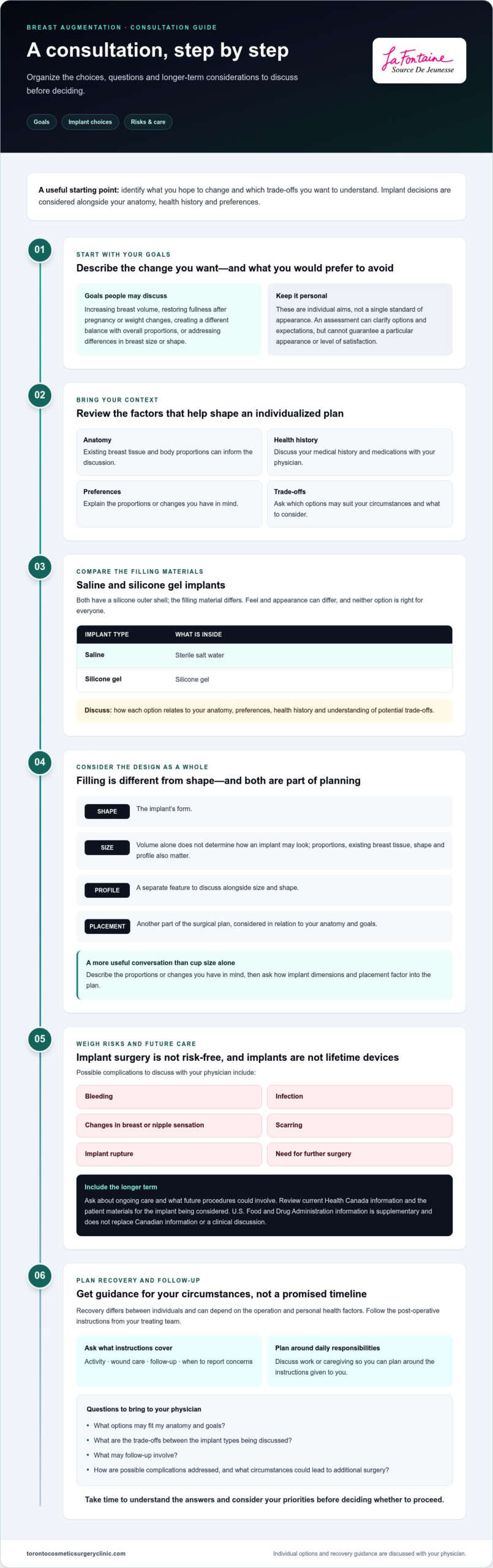
Implants differ in their filling material and design. Filling describes what is inside the implant; shape describes its form. These are separate choices, considered alongside size, profile, and placement when planning breast augmentation. Comparing each feature separately can help you understand why two implants with a similar volume may not be interchangeable.
How do saline and silicone gel implants differ?
Saline implants have a silicone outer shell filled with sterile salt water, while silicone gel implants have a silicone outer shell filled with silicone gel. Their feel and appearance can differ, but neither option is right for everyone. Discuss how each option relates to your anatomy, preferences, health history, and understanding of potential trade-offs.
Size is not just a number. The same volume may look different depending on a person’s proportions, existing breast tissue, and the implant’s shape and profile. Placement is another part of surgical planning. Rather than focusing on a cup size alone, explain the proportions or changes you have in mind and ask how implant dimensions and placement factor into the plan. These decisions are individualized, not universal recommendations based on a particular look or size.
Before deciding, review current Health Canada information and the patient materials for the implant being considered. The U.S. Food and Drug Administration also provides a general overview of the risks of breast implants; this U.S. resource is supplementary and does not replace Canadian information or a clinical discussion.
A consultation offers time to review your goals, medical history, and questions about implant options. You can ask how the implant’s filling, shape, size, profile, and placement relate to your priorities, and discuss what trade-offs to consider. At La Fontaine Cosmetic Surgery Clinic, physicians use patient goals and medical history to develop personalized treatment plans.
Breast augmentation risks, recovery, and planning your consultation
Elective surgery is still surgery, and breast augmentation isn’t risk-free. Possible complications include bleeding, infection, changes in breast or nipple sensation, scarring, implant rupture, and the need for further surgery. Implants aren’t lifetime devices, so ask about ongoing care and what future procedures could involve. The ASPS overview of implant types provides supplementary information; Canadian patients should also review current Health Canada materials and discuss implant-specific information with their physician.
Recovery differs between individuals and can depend on the operation and personal health factors. Recovery guidance depends on your individual clinical circumstances and should come from your treating team. Follow the post-operative instructions provided, including guidance about activity, wound care, follow-up, and when to report concerns. Avoid relying on a general timeline as a promise of how your own recovery will progress. Discuss routine responsibilities, such as work or caregiving, so you can plan around the instructions given to you.
What should you discuss with your physician before deciding?
Prepare to talk through your goals, medical history, medications, potential risks, alternatives, and longer-term implant considerations. Useful questions include: What options may fit my anatomy and goals? What are the trade-offs between the implant types being discussed? What follow-up may involve? How are possible complications addressed, and what circumstances could lead to additional surgery? Bring questions about the options already discussed, and take time to understand the answers before making a decision.
At La Fontaine Cosmetic Surgery Clinic, physicians develop personalized treatment plans based on patient goals and medical history. A consultation is an opportunity to review those factors, discuss options, and ask questions without treating a particular result as guaranteed. Consider your priorities and the information you receive before deciding whether to proceed.
Make your next step an informed one
Breast augmentation involves more than choosing an implant. Your goals, anatomy, and health history all inform the options to discuss. Saline and silicone gel implants have different characteristics, and elective surgery carries potential risks. Consider long-term implant care, alternatives, follow-up, and recovery instructions as part of your decision, rather than focusing on size alone.
At La Fontaine Cosmetic Surgery Clinic, physicians develop personalized treatment plans based on patient goals and medical history. A consultation gives you the opportunity to discuss your priorities, raise questions, and explore options before deciding whether to proceed. Book a consultation with La Fontaine Cosmetic Surgery Clinic to discuss your breast augmentation goals and personalized options.
Frequently Asked Questions
What is breast augmentation?
Breast augmentation is surgery intended to change breast volume or shape, commonly using implants. The procedure and plan depend on a person’s anatomy, health history, and goals. A consultation can help clarify available options, potential trade-offs, and realistic expectations. This guide focuses on implant augmentation; fat transfer is another approach that uses a person’s own fat to add volume.
What is the difference between saline and silicone breast implants?
Saline implants have a silicone outer shell filled with sterile salt water, while silicone gel implants have a silicone shell filled with gel. Their feel and appearance may differ, and neither option suits everyone. Discuss how each relates to your preferences, anatomy, health history, and understanding of implant care with your physician.
How do I know what breast implant size is right for me?
There isn’t one ideal implant size for everyone. Your physician can consider your goals, body proportions, existing breast tissue, and health history when discussing size and other choices, such as shape, profile, and placement. Share what you hope to change and what trade-offs matter to you. The discussion can help set expectations without promising a particular result.
How long does recovery from breast augmentation take?
Recovery varies from person to person, so there isn’t one timeline that applies to everyone. Your procedure, health, and individual healing can affect your experience. Follow the post-operative instructions provided by your treating team, including guidance about activity and follow-up. Discuss your work, caregiving, and other routine commitments in advance so you can plan around your personalized instructions.