


Choosing breast reduction is about more than deciding on a smaller breast size. You may be weighing how breast size affects comfort, appearance, or daily activities, while also wondering what surgery can realistically address. Your priorities and circumstances are individual, so another person’s experience cannot predict what to expect in your case.
This article explains the general purpose and approach of breast reduction, and how personal goals, health history, and anatomy can inform a surgical plan. It also covers topics to raise during a consultation, including incision placement and scars, possible changes in sensation, healing, and potential risks. At La Fontaine Cosmetic Surgery Clinic, board-certified physicians develop personalized plans around each patient’s goals and medical history. Use this information to prepare questions and decide whether exploring surgery feels right for you.
Key Takeaways
- Breast reduction may be considered for personal, physical, or proportion-related concerns, with potential benefits varying by individual.
- A physician’s clinical assessment helps shape a plan around your goals, anatomy, and health history.
- Medications, general health, and previous breast procedures may be relevant to surgical planning.
- Before deciding, discuss expected changes, healing, scars, sensation, and potential risks.
What breast reduction may address and how the procedure is approached
Breast reduction, also called reduction mammaplasty, is surgery that removes selected breast tissue and skin and reshapes the breast to align with an individual’s goals and clinical plan. People may consider it because of physical concerns, personal preferences about breast size, or a desire for proportions that feel more balanced to them. The reasons are individual, and the procedure is not limited to one motivation or expected result.
Knowing the broad approach can help you make a consultation more focused. For background on the terminology and general approaches, see Breast reduction surgery. The details of a surgical plan depend on a physician’s assessment and discussion with the patient.
What may happen during breast reduction surgery?
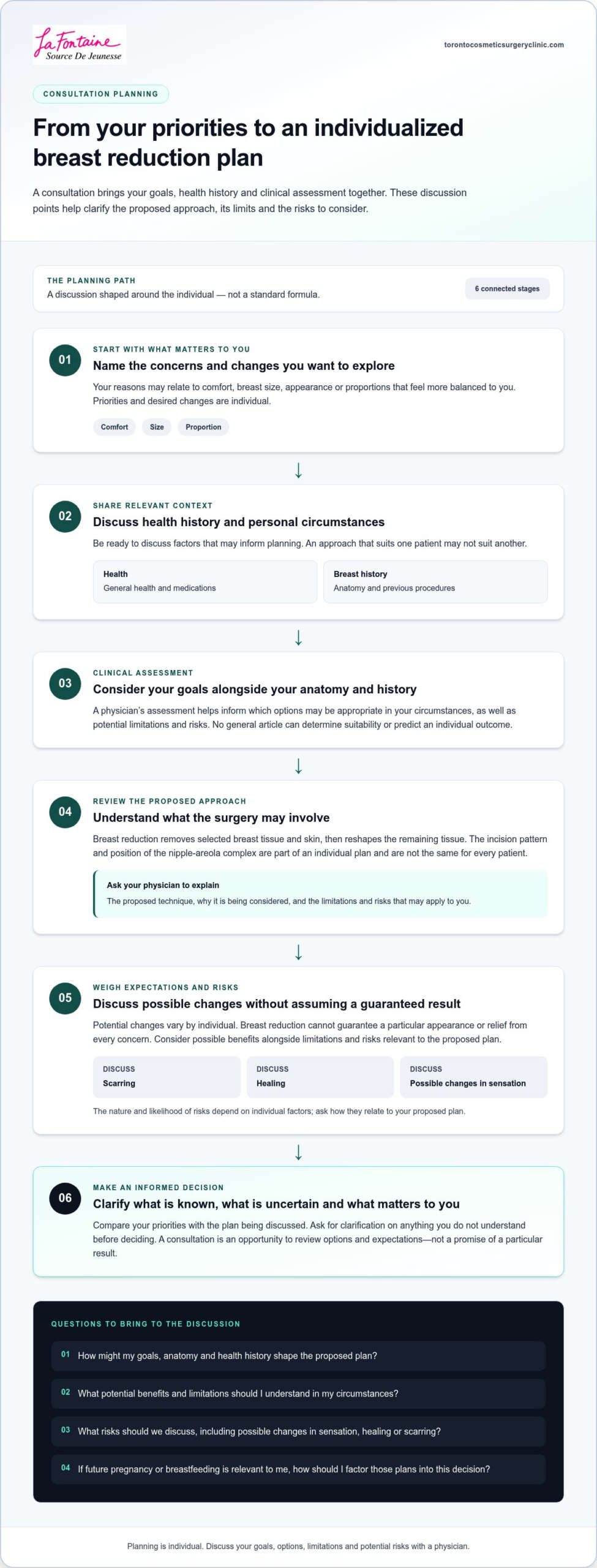
The general aim is to remove selected tissue and skin, then reshape the remaining breast tissue. The incision pattern and the position of the nipple-areola complex are part of the individual plan and are not the same for every patient. The approach may reflect breast anatomy, desired changes, and relevant health factors. Ask your physician to explain the proposed technique, why it is being considered, and what its limitations and risks may be for you.
Planning is personal. At La Fontaine Cosmetic Surgery Clinic, board-certified physicians develop treatment plans based on each patient’s goals and medical history. Use a consultation to explain what you hope to address and discuss which options may be appropriate. Be specific about your priorities, such as the changes you want to explore and the questions you have about scars, sensation, or healing. This can help clarify what may be possible in your situation without treating any outcome as guaranteed.
How a physician assesses goals, health history, and breast reduction planning
A surgical plan takes shape through an individual discussion, not a standard formula. A physician considers what you hope to change alongside a clinical assessment and your health history. Breast anatomy, previous breast procedures, medications, and general health may all be relevant to planning. Be ready to discuss these details openly so the physician can consider your circumstances and explain potential options, limitations, and risks. An approach that suits one patient may not suit another.
Bring forward the concerns that matter most to you, whether they relate to comfort, size, or proportion. A breast reduction surgery overview can provide general background. A consultation can focus on how your own history and goals may inform a proposed plan. No general article can determine your suitability or predict your individual outcome.
Which questions can help you prepare for a consultation?
Write down your main priorities and questions in advance. This can help you use the appointment to understand the proposed plan and clarify anything that remains uncertain. Consider asking:
- How might my goals, anatomy, and health history shape the proposed plan?
- What potential benefits and limitations should I understand in my circumstances?
- What risks should we discuss, including possible changes in sensation, healing, or scarring?
- If future pregnancy or breastfeeding is relevant to me, how should I factor those plans into this decision?
At La Fontaine Cosmetic Surgery Clinic, board-certified physicians develop personalized treatment plans based on each patient’s goals and medical history. A breast reduction consultation is an opportunity to discuss your questions and options in relation to your circumstances.
Weighing breast reduction benefits, limitations, and next steps
Breast reduction may lead to changes that align more closely with a patient’s goals, but the effects are individual. The procedure cannot guarantee a particular appearance or ensure relief from every concern. A balanced decision considers possible benefits alongside limitations and the surgical risks that apply to your circumstances.
Scars, healing, and possible changes in sensation are important parts of the discussion. The nature and likelihood of risks depend on individual factors, so a physician should explain them in relation to the proposed plan. The American Society of Plastic Surgeons’ breast reduction overview offers general background, but it cannot replace a personal clinical discussion.
How can you make an informed decision about breast reduction?
Take time to compare your priorities with the plan being discussed. Consider whether the proposed changes address your goals, what limitations may remain, and whether you understand the potential risks, healing considerations, scars, and possible changes in sensation. Ask for clarification on any point you do not understand before deciding. A consultation is an opportunity to review options and expectations, not a promise of a particular result.
At La Fontaine Cosmetic Surgery Clinic, board-certified physicians develop personalized treatment plans informed by each patient’s goals and medical history. A thoughtful discussion can help you understand how these factors relate to your options and possible next steps.
Book a consultation to discuss your goals and options.
Take your next step with clarity
A thoughtful breast reduction decision starts with understanding what you hope to address and how the proposed plan fits your circumstances. The procedure may relate to personal, physical, or proportion-related goals, but potential changes and limitations vary. Scars, healing, sensation, and other risks belong in an individualized discussion from the outset.
At La Fontaine Cosmetic Surgery Clinic, board-certified physicians develop personalized treatment plans based on each patient’s goals and medical history. Consultations can be booked online or by phone, giving you time to explore options, raise questions, and consider whether proceeding feels right for you.
Book a consultation to discuss your goals and options and take an informed first step.
Frequently Asked Questions
Is breast reduction right for me?
Breast reduction may be an option if you are considering changes for personal, physical, or proportion-related reasons. An individualized clinical assessment is needed to determine whether it fits your circumstances. A physician can discuss your goals, anatomy, health history, and potential benefits and limitations. A consultation is a chance to understand your options, not a guarantee of a particular result or a commitment to proceed.
What happens during breast reduction surgery?
Breast reduction generally involves removing selected breast tissue and skin, then reshaping the breast according to an individualized surgical plan. Incision patterns and nipple-areola positioning vary with the person’s anatomy and plan. Your physician can explain the proposed approach, what it is intended to address, and the relevant risks and expectations. Discuss your own circumstances rather than assuming that a general description applies to you.
Can breast reduction affect breastfeeding or sensation?
Breast reduction may affect sensation, and the possibility of changes should be discussed with your physician as part of reviewing individual risks. The effect on breastfeeding cannot be predicted from general information alone, since the surgical approach and personal circumstances matter. If you may want to breastfeed in the future, raise this during your consultation so it can be considered alongside your goals and proposed plan.
Will breast reduction leave scars?
Yes. Breast reduction involves incisions, so scars are expected. Their placement and appearance depend on the surgical plan and individual healing; your physician can explain what may apply in your case. Ask where incisions are planned, how healing will be assessed, and what factors could affect scar appearance. The discussion should set realistic expectations rather than promise that scars will be unnoticeable.