


The headline price rarely tells the whole story. Liposuction cost in Canada depends on the treatment plan behind the quote, including the areas being addressed and the care involved. Two figures may not cover the same scope.
It’s understandable to want a clear number before considering surgery. A useful quote explains how your goals, treatment areas and medical history inform the plan, and which care components the fee covers. Liposuction fees may be flat or customized, and generally cover surgical care, clinical facility time, pre-operative planning and post-operative follow-up appointments.
This guide explains what can shape a liposuction quote and how to compare treatment plans beyond the headline price. You’ll also find questions to discuss during a personalized consultation, so you can better understand the proposed scope of care before deciding on next steps.
Key Takeaways
- Understand how treatment areas and the scope of care shape a personalized liposuction cost quote.
- Recognize the care components that may be reflected in a procedure fee, from clinical facility time to follow-up appointments.
- Compare quotes by reviewing treatment areas, facility time, pre-operative planning and follow-up, not just the headline price.
- Prepare for a consultation by defining your goals and discussing your medical history and proposed treatment scope.
- Use a practical checklist to clarify the plan and fee details before deciding on next steps.
Why Does Liposuction Cost Vary Between Treatment Plans?
Liposuction cost depends on the individualized procedure plan and its scope. A personalized fee is more informative than an advertised starting figure because it reflects the areas being considered, the complexity of the procedure, the clinical facility time required and the care planned around surgery.
These factors are connected. Treating one area may involve a different surgical plan and amount of facility time than addressing several areas. The location and extent of the areas also inform the physician’s plan. A broader scope isn’t automatically appropriate for every patient. Consultation findings and medical history help guide a plan that may align with the patient’s goals.
How do treatment areas and procedure scope affect a quote?
The areas being considered help define the procedure’s scope. A plan for one area may differ from a multi-area plan in its planning, procedural complexity and facility time. The fee reflects the proposed treatment, not simply the number of areas mentioned in an initial request. The physician assesses the patient and discusses which areas may be suitable before developing an individualized plan.
For an overview of the procedure, its techniques and medical considerations, see Liposuction. This background can help prepare you for a consultation, while a patient-specific assessment is needed to determine an appropriate treatment plan.
Why is liposuction cost personalized?
A consultation connects your desired changes with your medical history and the physician’s assessment. Your goals guide the discussion about treatment scope, while health information helps inform the plan. The resulting quote relates to that proposed plan and its care requirements, rather than a general estimate that may describe a different procedure.
At La Fontaine Cosmetic Surgery Clinic, board-certified physicians develop personalized treatment plans around patients’ goals and medical history. Procedure fees may be flat or customized to reflect the plan’s scope. An advertised figure can offer a general reference, but it doesn’t explain whether the treatment areas, facility time and related care match your needs.
Liposuction fees vary because each patient’s goals, medical history, treatment scope and care plan inform the procedure being proposed.
That’s why a personalized fee is more useful than a headline price alone. Understanding how the assessment informs the plan is the first step to interpreting a quote with confidence.
What May Be Included in a Liposuction Cost Quote?
A quote is most useful when it explains the care behind the fee, not just the amount. At La Fontaine Cosmetic Surgery Clinic, procedure fees generally cover surgical care, clinical facility time, pre-operative planning and post-operative follow-up appointments. These components describe the surgical care plan, rather than guaranteeing that every related service or expense is included.
Which care components should a patient understand?
Review the written scope to understand what the procedure fee covers. The key components generally include:
- Surgical care: Care related to carrying out the planned liposuction procedure.
- Clinical facility time: Use of the clinical facility for the planned procedure.
- Pre-operative planning: Planning informed by your goals, medical history and proposed treatment scope.
- Post-operative follow-up appointments: Follow-up care after surgery as part of the procedure plan.
The treatment plan and fee structure are personalized. Read the quote according to the services and care it describes rather than assuming unrelated services or expenses are included. For general information about the procedure and what patients may expect, see the Mayo Clinic’s guide to Liposuction.
An individualized consultation connects the proposed scope with the fee. Discuss your liposuction goals as part of understanding the plan and the care it involves.
How do flat and customized procedure fees differ?
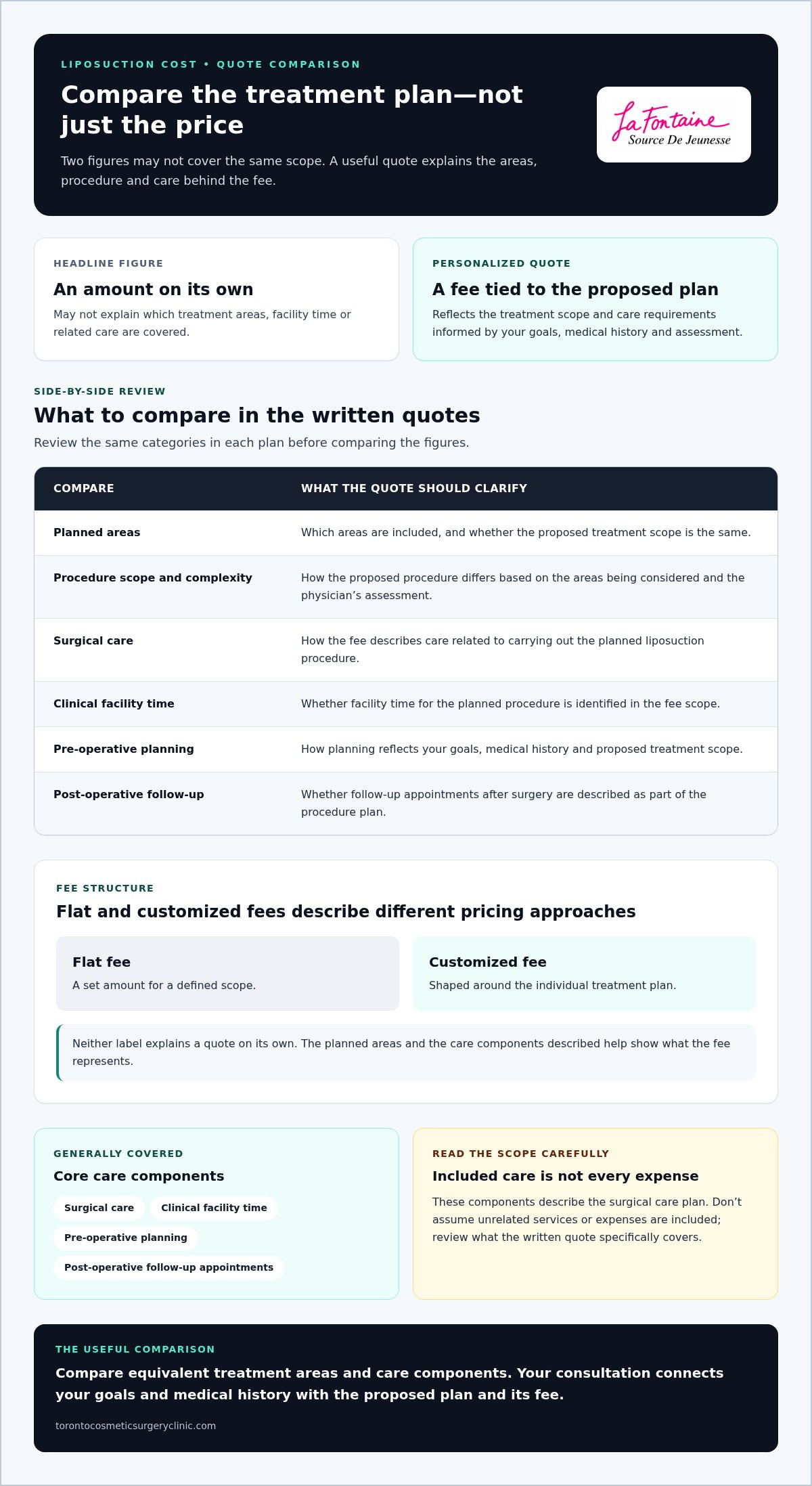
A procedure fee may be flat or customized, depending on the treatment plan. A flat fee applies as a set amount to a defined scope, while a customized fee is shaped around the individual plan. Neither label explains the quote on its own. The planned areas and described care components help clarify what the fee represents.
Before comparing figures, look for a clear account of the proposed procedure and included care. If one quote describes facility time and follow-up while another gives only a headline figure, they may not cover equivalent scopes. Review the written plan to understand what the fee covers and how it relates to the treatment discussed. This lets you compare the proposed care, not just the price.
How Can You Compare Liposuction Cost Quotes Fairly?
A fair comparison starts with the treatment plan, not the headline figure. Quotes may describe different areas, levels of procedural complexity or care components, so you need to understand what each covers before comparing them. The American Society of Plastic Surgeons also outlines factors that can influence Liposuction Cost, offering useful context as you review your options.
What should a liposuction quote comparison include?
Use the written plans to compare the same categories. Note any unclear line items to discuss during your consultation.
| Compare | What to understand |
|---|---|
| Planned areas | Which areas are included, and whether the proposed treatment scope is the same. |
| Surgical care | How the quote describes care related to the planned procedure. |
| Clinical facility time | Whether facility time for the procedure is identified in the fee scope. |
| Pre-operative planning | Whether planning informed by your goals and medical history is described. |
| Post-operative follow-up | Whether follow-up appointments are included in the stated care plan. |
For example, don’t compare a quote for one treatment area at face value with one covering several areas. The scope, planned facility time and care details may differ, even when the quotes use similar labels. Compare what is actually proposed instead of assuming the same term means an identical plan.
Why should price alone not determine your decision?
The lowest headline figure doesn’t necessarily represent the most suitable plan. It may describe a different treatment scope or provide less detail about planning and follow-up. A personalized assessment considers your goals and medical history, helping the physician shape a plan that reflects your needs. The full scope of care matters when comparing figures.
Quotes are meaningful to compare only when they describe a like-for-like treatment scope and make the associated care clear. If a line item is unclear, or a component appears in one plan but not another, note it for discussion at your consultation. This gives you a more useful basis for weighing the proposed plans than the headline price alone.
How Do Your Goals Shape a Liposuction Treatment Plan and Fee?
A clear fee discussion starts with your goals, then moves through medical assessment and the proposed treatment scope. This helps the physician understand the changes you want to discuss, assess relevant health information and determine whether a proposed plan may align with your goals. You can then understand the fee in relation to the plan, rather than as a stand-alone figure.
What should you prepare before a liposuction consultation?
Be ready to describe the areas you’d like to discuss and the changes you hope to achieve. Clear, realistic goals can guide the conversation, but they don’t mean every requested area will be suitable for treatment. Bring relevant medical history and note any current health questions you want to raise.
- Identify the areas of concern and what you’d like to discuss about them.
- Prepare relevant health history to share with the physician.
- Write down questions about the proposed scope, planning and care.
These notes can help keep the consultation focused. You don’t need to arrive with a treatment plan already decided. The physician’s assessment helps determine what approach may be appropriate in light of your goals and medical history.
How does consultation planning connect to the fee?
After discussing your goals and health background, the physician assesses the proposed treatment scope and develops a plan. At La Fontaine Cosmetic Surgery Clinic, board-certified physicians personalize liposuction treatment plans around these factors. The plan informs the surgical scope and care required, giving you context for understanding the liposuction cost. A general estimate may not reflect the details of an individualized plan.
Specific questions can make the fee discussion more useful: Which areas are being considered? What scope does the physician recommend? How does the written fee relate to that plan? These questions help you understand the reasoning behind the proposed treatment without presuming a particular outcome or fee.
An individualized assessment connects your goals and medical history to a tailored treatment plan and its associated fee.
Prepare your questions and discuss the plan in a personalized consultation. Discuss your liposuction treatment plan.
What Are the Next Steps for Understanding Your Liposuction Cost?
Once you’ve reviewed the factors that shape a quote, prepare to discuss your goals and proposed care plan. An individualized consultation is the next step to understanding how the physician’s assessment informs the treatment scope and fee. La Fontaine Cosmetic Surgery Clinic’s board-certified physicians consider each patient’s goals and medical history when developing a liposuction treatment plan.
What questions can help clarify a personalized fee?
Bring a short list of questions to connect the proposed plan with its fee. You may find it useful to ask:
- How does the proposed treatment scope relate to my goals and assessment?
- Which areas are included in the plan?
- Which care components are described as part of the procedure fee?
- How do pre-operative planning and post-operative follow-up fit into the care plan?
Use the written plan as a reference while discussing the answers. The clinic’s procedure fees generally cover surgical care and clinical facility time, as well as pre-operative planning and post-operative follow-up appointments. Understanding how these components relate to your proposed plan can help you interpret the fee without assuming it includes unrelated services or expenses.
How can you move from research to a consultation?
Before the consultation, note the areas you’d like to discuss, the changes you hope to explore and relevant medical history. Bring questions about the proposed scope and fee structure. This preparation gives the physician a clear starting point for an individualized discussion and helps you focus on the details that matter to you.
A consultation supports an informed conversation about whether a proposed plan aligns with your goals and medical history. It doesn’t guarantee a particular treatment plan, outcome or fee. Liposuction cost is understood in relation to the individualized plan, so use the appointment to clarify the assessment, proposed scope and care included.
Take the next step with a focused discussion about your goals and options. Book a liposuction consultation.
Take the Next Step with Confidence
A useful liposuction cost quote reflects the proposed treatment scope and the care connected to it. Look beyond the headline figure and consider the areas discussed, surgical care, clinical facility time, pre-operative planning and post-operative follow-up. A personalized consultation can clarify how these elements fit together.
At La Fontaine Cosmetic Surgery Clinic, board-certified physicians create treatment plans based on each patient’s goals and medical history. Procedure fees generally cover surgical care, clinical facility time, pre-operative planning and post-operative follow-up appointments. The plan and fee structure are personalized, making an individual assessment important to understanding your options.
Bring your questions and the goals you’d like to discuss. Book a consultation to discuss your liposuction goals and take an informed next step toward a plan tailored to you.
Frequently Asked Questions
How much does liposuction cost in Canada?
There isn’t one fee that applies to every liposuction plan in Canada. Liposuction cost depends on the proposed treatment areas, procedure scope, clinical facility time and care plan. Fees may be flat or customized, and a personalized quote is more informative than a general starting figure. A consultation connects the patient’s goals and medical history with a specific plan and its associated fee.
What factors affect the cost of liposuction?
The treatment areas and overall scope of the procedure are key factors. A plan involving multiple areas may require different planning and facility time than a more limited plan. Procedural complexity and the care involved also help shape the fee. The physician’s assessment, informed by the patient’s goals and medical history, guides the proposed plan, so the fee reflects more than the area names alone.
What is usually included in a liposuction quote?
A procedure fee generally covers surgical care, clinical facility time, pre-operative planning and post-operative follow-up appointments. The written quote explains how these components relate to the proposed plan. Don’t assume unrelated services or expenses are included. Review the stated scope and discuss unclear items during your consultation to understand what the fee represents.
Does liposuction cost more when multiple areas are treated?
Fees may differ when a plan includes multiple areas because the treatment scope, complexity and facility time may change. However, the fee depends on the individualized plan, not simply the number of areas requested. A physician assesses whether the proposed areas are appropriate and discusses the plan with the patient. Compare the documented scope and care components to understand how the fee is structured.
Can liposuction costs be compared between treatment plans?
Yes, but compare plans only after understanding their scope. Review which areas are proposed, the surgical care described, clinical facility time, pre-operative planning and post-operative follow-up. Two headline figures may represent different plans, so they may not be like-for-like comparisons. A clear written scope helps you assess what each fee covers and identify details to discuss during a consultation.
Is liposuction considered medically necessary in Canada?
Liposuction for aesthetic body contouring is generally considered an elective cosmetic procedure, rather than a treatment for obesity. Whether a procedure is medically necessary depends on the individual circumstances and clinical assessment. Don’t assume that cosmetic liposuction will qualify for public or private coverage. If coverage is relevant to your situation, review your plan’s terms and discuss the purpose of the proposed procedure during your consultation.
What should I ask during a liposuction cost consultation?
Ask how the proposed treatment areas relate to your goals and assessment, and how your medical history informs the plan. Clarify which care components the procedure fee generally covers, including surgical care, facility time, planning and follow-up appointments. You can also ask whether the fee is flat or customized for the proposed scope. Bring your questions and relevant health information to support a focused discussion.