


What if the first step isn’t choosing a procedure, but clarifying what you want to address? Exploring plastic surgery options can feel overwhelming when a concern might call for surgery, a non-surgical treatment, or a discussion of both. The right direction depends on your goals, anatomy, and medical history, not a one-size-fits-all menu.
This guide outlines surgical procedures such as breast augmentation, abdominoplasty, and rhinoplasty, as well as non-surgical treatments such as Botox and dermal fillers. It also explains how a personalised consultation can help you discuss your priorities, health history, and questions with a physician. At La Fontaine Cosmetic Surgery Clinic, board-certified physicians use this information to develop individualised treatment plans. Learn how surgical and non-surgical approaches differ, what factors shape a recommendation, and how to prepare for a thoughtful conversation about your goals.
Key Takeaways
- Plastic surgery can involve reconstructive or cosmetic goals, with surgical and non-surgical options considered according to individual circumstances.
- Compare options by the concern you want to discuss, not by popularity or promised outcomes.
- Breast augmentation, liposuction, and abdominoplasty address different concerns. Learn about each before discussing what may suit your goals.
- A consultation gives you an opportunity to share your goals and medical history while a physician considers appropriate options and develops a personalized treatment plan.
What does plastic surgery include? Understand the main care categories
Plastic surgery is a medical specialty involving procedures that change or restore body structures. Its scope includes reconstructive care, which may address changes related to injury, illness, or congenital differences, and cosmetic care, which focuses on a person’s appearance goals. These aims can overlap, and no single category explains every patient’s reasons for considering treatment. The Plastic surgery overview describes the specialty’s broad scope and its reconstructive and cosmetic categories.
Options may be surgical or non-surgical. Breast augmentation, liposuction, and abdominoplasty are surgical procedures; Botox and dermal fillers are non-surgical aesthetic treatments. Understanding plastic surgery plastic surgery options starts with recognizing this distinction, not assuming one approach suits everyone. A physician considers your goals and medical history when discussing possible options. At La Fontaine Cosmetic Surgery Clinic, board-certified physicians use these factors to develop personalized treatment plans.
How are surgical procedures different from non-surgical treatments?
A surgical procedure involves an operation; a non-surgical aesthetic treatment addresses appearance without an operation. This distinction describes the nature of the treatment, not which option is preferable. Breast augmentation, liposuction, and abdominoplasty are surgical examples, while Botox and dermal fillers are non-surgical examples. They address different concerns, so the treatment names alone can’t establish what may suit you. Before discussing options, explain what you’d like to address and share relevant health history. An individualized assessment helps guide the conversation without presuming that a particular procedure or treatment is right for you.
How to compare plastic surgery options with your goals
Start with the concern you want to discuss, not a procedure’s popularity or an imagined outcome. Describe what you hope to address, which area is involved, and what matters most to you. This gives a physician a clearer starting point for an individual assessment. A useful comparison of plastic surgery options is grounded in your priorities, not a ranking of procedures.
Different procedures address different concerns. Breast augmentation is intended to increase breast size; liposuction removes localized fat; and abdominoplasty, also called a tummy tuck, addresses the abdomen through surgery. These procedures are not interchangeable, and their names alone can’t establish suitability. The American Society of Plastic Surgeons (ASPS) offers general information about procedures that can help you prepare questions for a clinical discussion.
What questions help clarify which procedure to discuss?
Before a consultation, consider what you want to address, what your priorities are, and what you’d like to understand about possible options. Share relevant medical history, including previous procedures, health conditions, medications, or allergies. These details help inform the physician’s assessment and discussion of suitability. The choice of procedure depends on your goals, medical history, and the physician’s assessment.
Read the dedicated guides to breast augmentation, liposuction, and abdominoplasty, then note any questions that remain. Guides can provide background, while a consultation gives you space to discuss how your individual circumstances shape the conversation. You can also ask what the procedure fee includes and which follow-up appointments are part of the care plan. When you’re ready, arrange a personalized consultation to discuss your concerns with a physician.
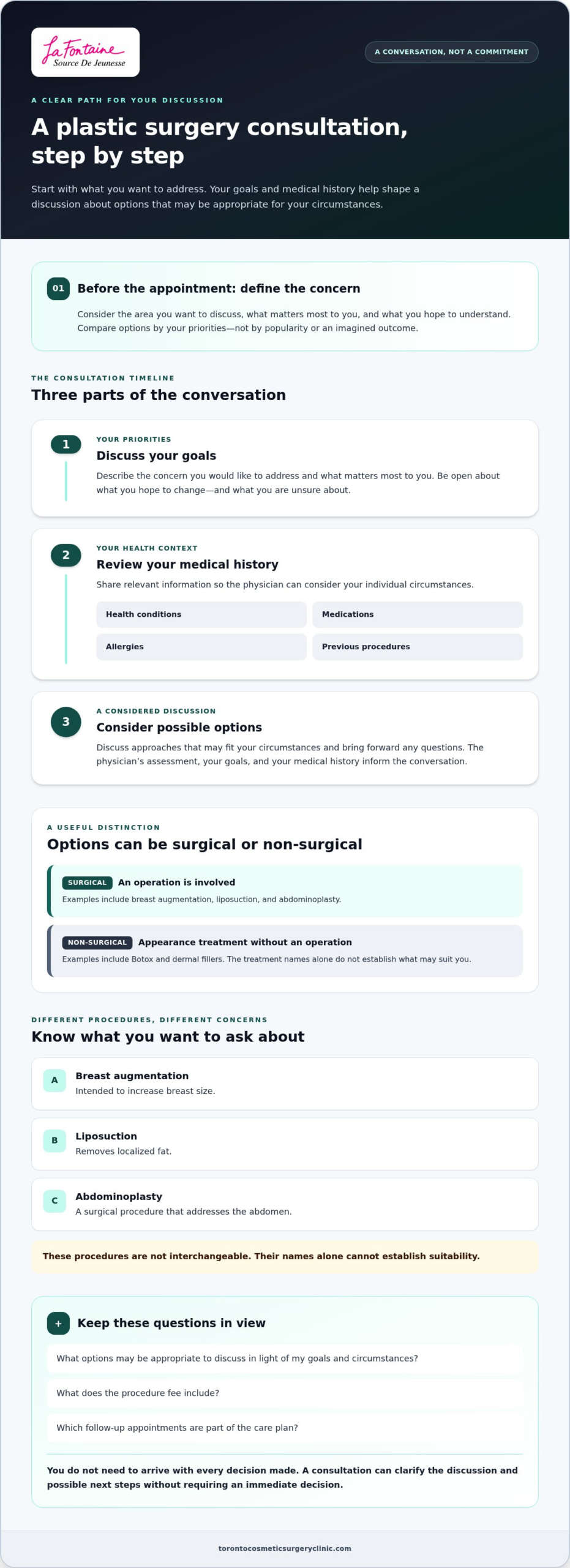
What to expect from a plastic surgery consultation and next steps
A consultation is a focused conversation about what you hope to address and which options may be appropriate to discuss. A plastic surgery plastic surgery consultation doesn’t commit you to a procedure or a fixed treatment pathway. It gives the physician an opportunity to understand your priorities, review relevant health information, and consider next steps with you.
- Discuss your goals. Describe the concern you’d like to address and what matters most to you.
- Review your medical history. Share relevant health conditions, medications, allergies, and previous procedures.
- Consider possible options. Discuss approaches that may fit your circumstances, along with any questions you have about them.
How can patients prepare for a consultation?
Make a short note of your goals, relevant medical history, and questions so you can cover what matters to you during the appointment. Be open about your expectations, including what you hope to change and what you’re unsure about. This helps the physician understand your perspective and explain options in the context of your circumstances. Treatment planning is personalized, and the discussion may clarify next steps without requiring an immediate decision.
La Fontaine Cosmetic Surgery Clinic’s physicians use patient goals and medical history to inform personalized treatment plans. If you’re ready to discuss your concerns and possible options, arrange a consultation online or by phone.
Take the next step with a clear sense of your goals
Let your priorities guide the next conversation. Your interest in plastic surgery can become a more focused discussion when you identify what matters to you and bring your questions forward. At La Fontaine Cosmetic Surgery Clinic, board-certified physicians use your goals and medical history to inform personalized treatment planning, providing an individualized starting point without presuming a particular choice.
You don’t need to arrive with every decision made. A consultation is an opportunity to explore your concerns, discuss options that may be appropriate, and consider what feels right for your circumstances. Take the next step and book a consultation to discuss your goals and personalized options.
Frequently Asked Questions
Is plastic surgery the same as cosmetic surgery?
No. The terms are related, but they aren’t interchangeable in every context. Cosmetic surgery focuses on appearance, while plastic surgery can encompass a broader range of surgical procedures, including reconstructive aims. The distinction doesn’t determine which care is appropriate for an individual. A physician can discuss your goals and circumstances to help clarify which options may be relevant to you.
Can a consultation help me decide which plastic surgery procedure to consider?
Yes. A consultation gives you a chance to discuss what you’d like to address, relevant medical history, and questions about possible options. The physician can use that conversation to develop a personalized treatment plan. It doesn’t guarantee eligibility for a procedure or a particular outcome. Use the conversation to explore plastic surgery options in the context of your circumstances.
How long does recovery from plastic surgery take?
Recovery varies by procedure and individual, so one timeline can’t apply to everyone. The type of treatment and your personal circumstances shape what to expect. Discuss recovery while planning for the specific procedure under consideration, and ask the physician what guidance applies to you. General information can provide context, but it can’t replace advice tailored to your care.
Can different cosmetic procedures be combined?
Whether procedures can be combined depends on your goals, medical history, and the physician’s assessment. A combination shouldn’t be assumed suitable simply because you’re considering several concerns. La Fontaine Cosmetic Surgery Clinic offers Mommy Makeover as a service, and a physician can discuss how your individual circumstances inform treatment planning. Use the consultation to raise the options you’re considering and understand the next steps.