


If you’re considering blepharoplasty, start by identifying the eyelid concern you want to discuss. Upper eyelid surgery may address excess skin or a drooping appearance, while lower eyelid surgery may address puffiness or loose skin. These concerns can involve one area or both, but describing a feature does not determine which approach, if any, is suitable. Your individual features and health matter.
This guide explains what blepharoplasty involves and what a physician may consider during an assessment, including your goals and medical history. It also outlines useful questions about possible benefits, risks, alternatives and recovery. General information can help you prepare, but it can’t determine your personal suitability. A physician’s assessment is essential to planning care around your needs. For a broader overview of plastic surgery procedures, choices, and consultations, explore how goals and health history can shape treatment discussions.
Key Takeaways
- Blepharoplasty involves surgery on the upper eyelids, lower eyelids, or both, depending on the concerns being assessed.
- Describe the specific features you want to address so your physician can consider your goals alongside your eyelid anatomy and health history.
- Use a consultation to discuss possible approaches, risks, alternatives and realistic expectations for your individual case.
- Recovery and care instructions vary. Ask your physician what to expect before deciding on next steps.
Blepharoplasty explained: what eyelid surgery can address
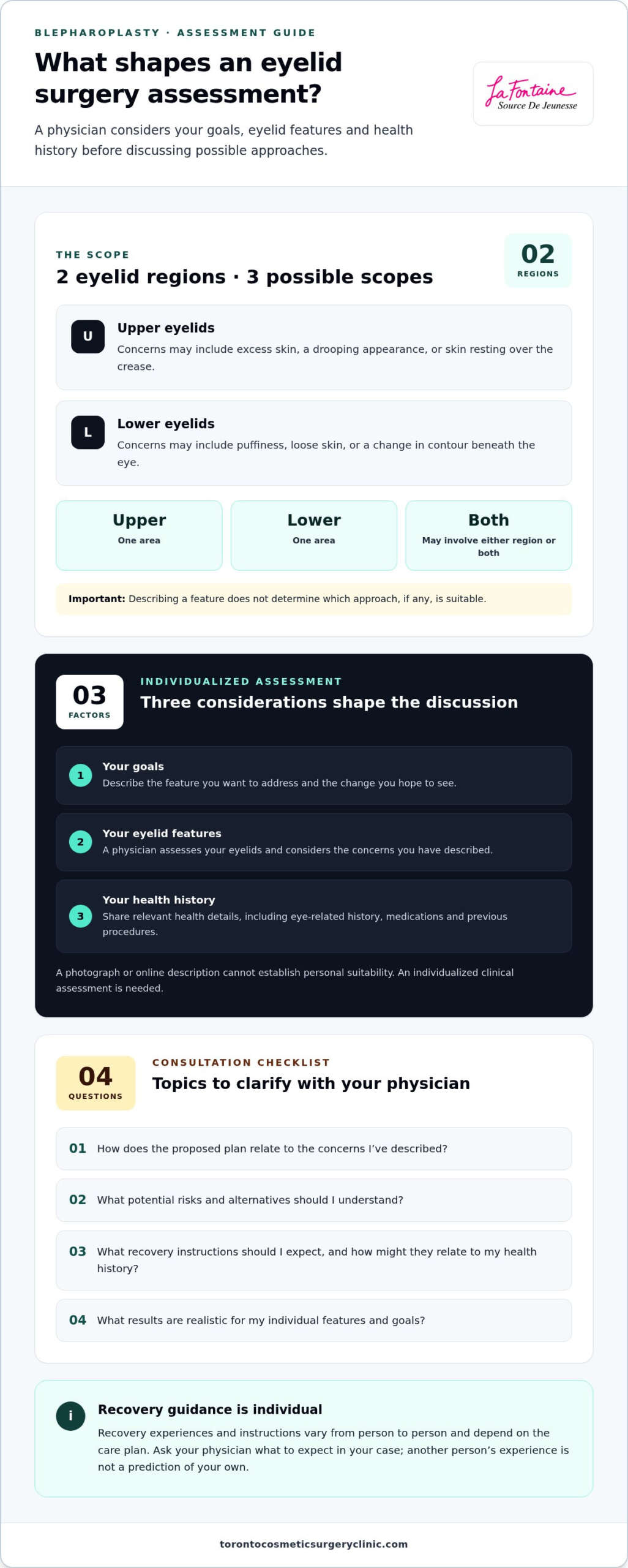
Blepharoplasty is surgery involving the eyelids. It may focus on the upper eyelids, the lower eyelids, or both, depending on a person’s concerns and the clinical assessment. Upper eyelids may have excess skin or appear drooped. Lower eyelids may have puffiness or loose skin. These areas involve different concerns, and describing a feature does not establish which approach, if any, is appropriate.
For a general overview of the term and eyelid anatomy, see the Blepharoplasty Wikipedia article. General information is not a substitute for an individualized clinical assessment.
Upper- and lower-eyelid surgery: what is the distinction?
Upper-eyelid surgery addresses the area above the eye, from the crease towards the brow. You might notice skin resting over the crease or a heavy appearance around the upper lid. Lower-eyelid surgery concerns the area beneath the eye, where puffiness, loose skin or a change in contour may be the focus. Concerns can involve one area or both, and the same feature may not have the same significance for every person.
The distinction is the location and nature of the concern, not a standard treatment plan. During an assessment, a physician considers the eyelids and what you hope to address before discussing whether surgery may be suitable. To make that conversation specific, describe the feature that concerns you, whether it affects the upper or lower eyelid, and what change you hope to see. This helps connect your goals with the features observed during an examination instead of assuming that a particular appearance calls for a particular procedure.
Blepharoplasty candidacy: how goals, anatomy, and health shape assessment
A photograph or online description can’t establish whether blepharoplasty is suitable for you. Similar-looking eyelid concerns may have different underlying features, and appearance alone doesn’t reveal your health considerations or what you hope to change. A clinician’s assessment is needed to discuss whether surgery may be appropriate in your circumstances.
Candidacy and treatment planning are individualized, shaped by each person’s goals, eyelid features and medical history.
What should an eyelid surgery assessment consider?
A physician can discuss the concern you want to address, the result you hope for and whether your expectations are realistic. They can also assess your eyelids and review relevant health information before discussing possible approaches. Be ready to share your medical history and any health details that may affect planning. Ask what the procedure is intended to address, what it may not change, and what risks and alternatives you should consider.
- Describe the specific eyelid feature you want to address and the change you hope for.
- Share relevant health history, including eye-related history, medications and previous procedures.
- Ask how the assessment informs the options and expected results for your case.
Coverage criteria can vary by payer and jurisdiction. The CMS Medical Policy on Blepharoplasty describes a United States Medicare policy, so it shouldn’t be treated as guidance on Canadian coverage or as a way to determine personal suitability.
La Fontaine Cosmetic Surgery Clinic offers eyelid surgery and develops personalized treatment plans based on each patient’s goals and medical history. You can book an eyelid surgery consultation to discuss your concerns with a physician.
Blepharoplasty consultation and recovery: informed next steps
A consultation gives you time to explain what you’d like to address and learn how your health history and eyelid concerns inform possible recommendations. Your physician can outline a proposed plan, discuss potential risks and alternatives, and explain the recovery guidance involved. Bring your questions and take time to understand the options before making a decision. If anything about the plan or its limitations is unclear, ask for an explanation in terms of your own goals and circumstances.
Questions to bring to a blepharoplasty consultation
Use the discussion to clarify what a suggested approach is intended to address and what it may not change. The American Society of Plastic Surgeons describes its focus on quality care, ethics and research in plastic surgery. For your own decision, keep the conversation centred on your circumstances and the physician’s assessment.
- How does the proposed plan relate to the concerns I’ve described?
- What potential risks and alternatives should I understand?
- What recovery instructions should I expect, and how might they relate to my health history?
- What results are realistic for my individual features and goals?
Recovery experiences and instructions vary from person to person and depend on the individual care plan. Your physician can explain what to expect in your case, provide relevant guidance and clarify how to follow it. Another person’s recovery account is not a prediction of your own experience, so ask for guidance that relates to your plan.
At La Fontaine Cosmetic Surgery Clinic, consultations can be booked online or by phone. A physician can discuss your eyelid surgery goals and explain a personalized plan based on your needs.
Move forward with clarity and confidence
Choosing whether to pursue blepharoplasty is a personal decision, and reading about the procedure doesn’t commit you to surgery. Consider what you hope to change, how the proposed plan addresses that concern, and what limitations and care it involves. A considered decision leaves room for questions and time to reflect on the information that matters to you.
At La Fontaine Cosmetic Surgery Clinic, you can discuss your eyelid surgery goals with a physician and explore whether a recommendation fits your needs. Arrange a consultation to discuss your eyelid surgery goals and take time to decide how you’d like to proceed.
Frequently Asked Questions
What is blepharoplasty?
Blepharoplasty is a surgical procedure involving the eyelids. The term describes the area treated, not one fixed operation or a guaranteed result. A physician can explain which eyelid features a proposed procedure is intended to address and whether the plan aligns with your goals. Ask what changes may fall outside the procedure’s scope, too.
Can blepharoplasty address both upper and lower eyelids?
Yes, a treatment plan may involve the upper eyelids, the lower eyelids, or both, depending on the findings and the person’s goals. For example, someone concerned about upper-lid skin and under-eye puffiness can raise both concerns during an assessment. A physician can discuss whether addressing one or both areas is appropriate for that individual.
Who may be a candidate for blepharoplasty?
Someone whose eyelid concerns and health circumstances are suitable for surgery may be considered, but a clinician must assess this individually. Be prepared to discuss relevant health conditions, medications, eye-related history and previous procedures. These details help the physician understand your circumstances and discuss whether the potential benefits, risks and limitations fit your expectations.
What is recovery like after blepharoplasty?
Recovery differs between individuals, so your physician’s instructions are the most relevant guide for your care. Before proceeding, ask what changes or sensations you might experience, how to follow care instructions and whom to contact with concerns. Plan your schedule around the guidance you receive rather than assuming another person’s recovery experience will match your own.